The Cost of This Job
We don't have a flat number to quote you here, because roller jobs vary by whether you're swapping a full set of ten rollers or just the two or three that went bad on one side, and whether the track needs straightening along with it. What we can tell you is what drives the cost up or down: nylon rollers with sealed bearings cost more than steel, and a door that's been limping on a bent roller long enough usually needs a track adjustment thrown in, since the roller wearing unevenly tends to walk the track out of plumb. If your door is still under the builder's original hardware from the 1990s stock common across this area, you're likely looking at the full set rather than a couple of rollers, since they all wear out around the same mileage. We'll look at the door in person before we give you a number - guessing over the phone just means we're wrong in one direction or the other.
What You Are Seeing
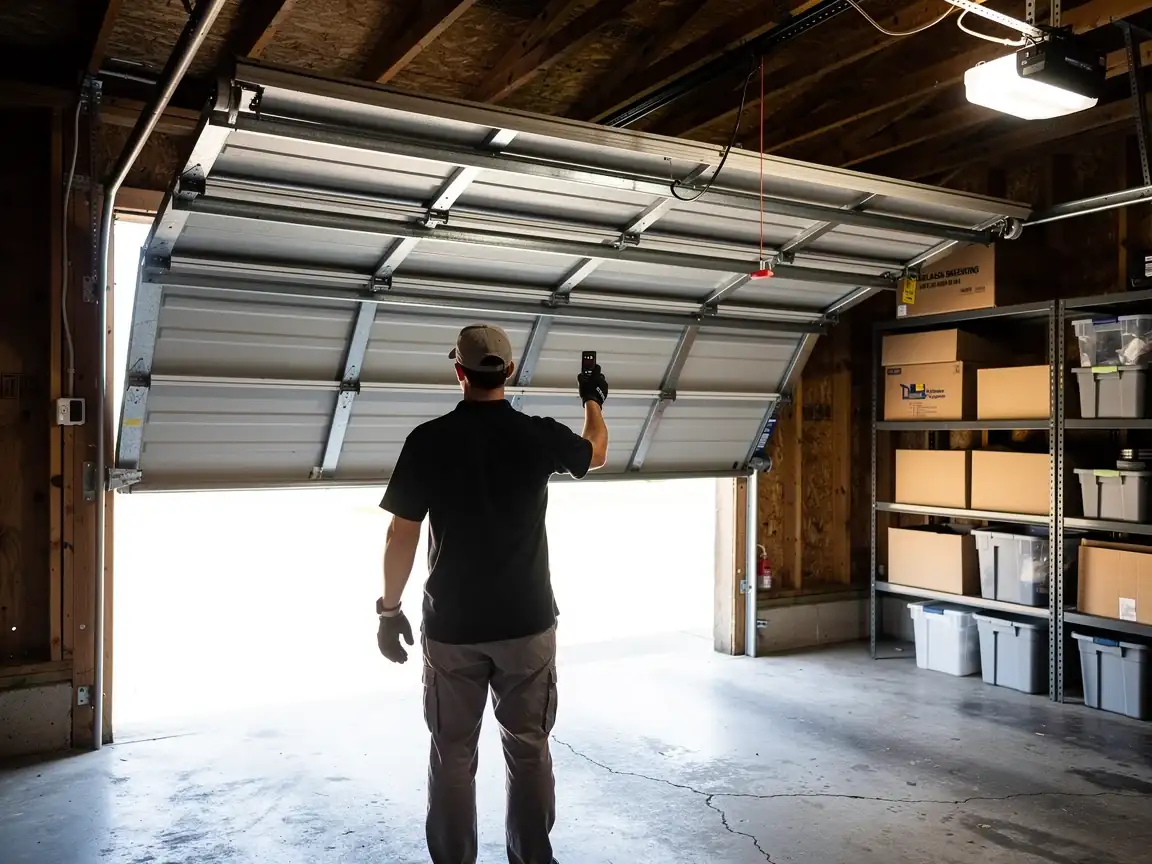
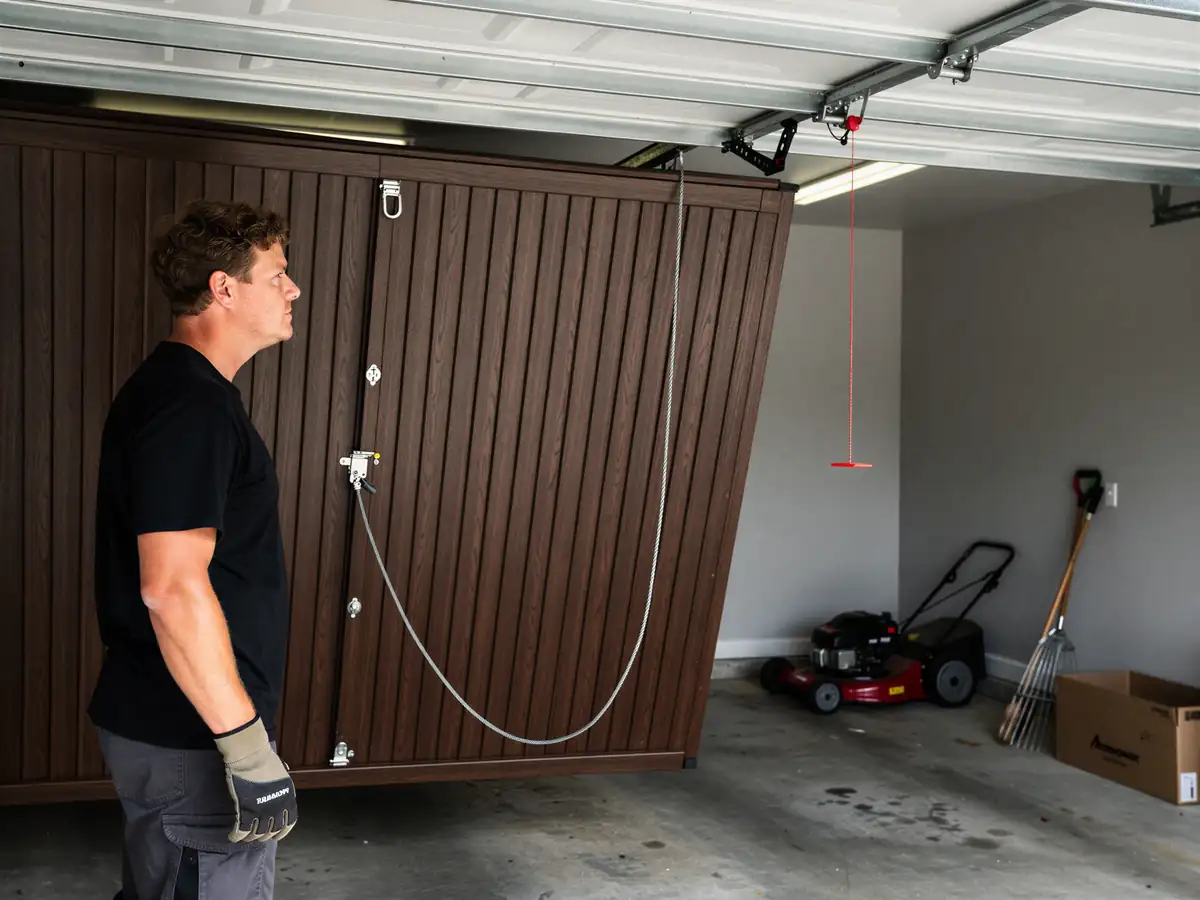
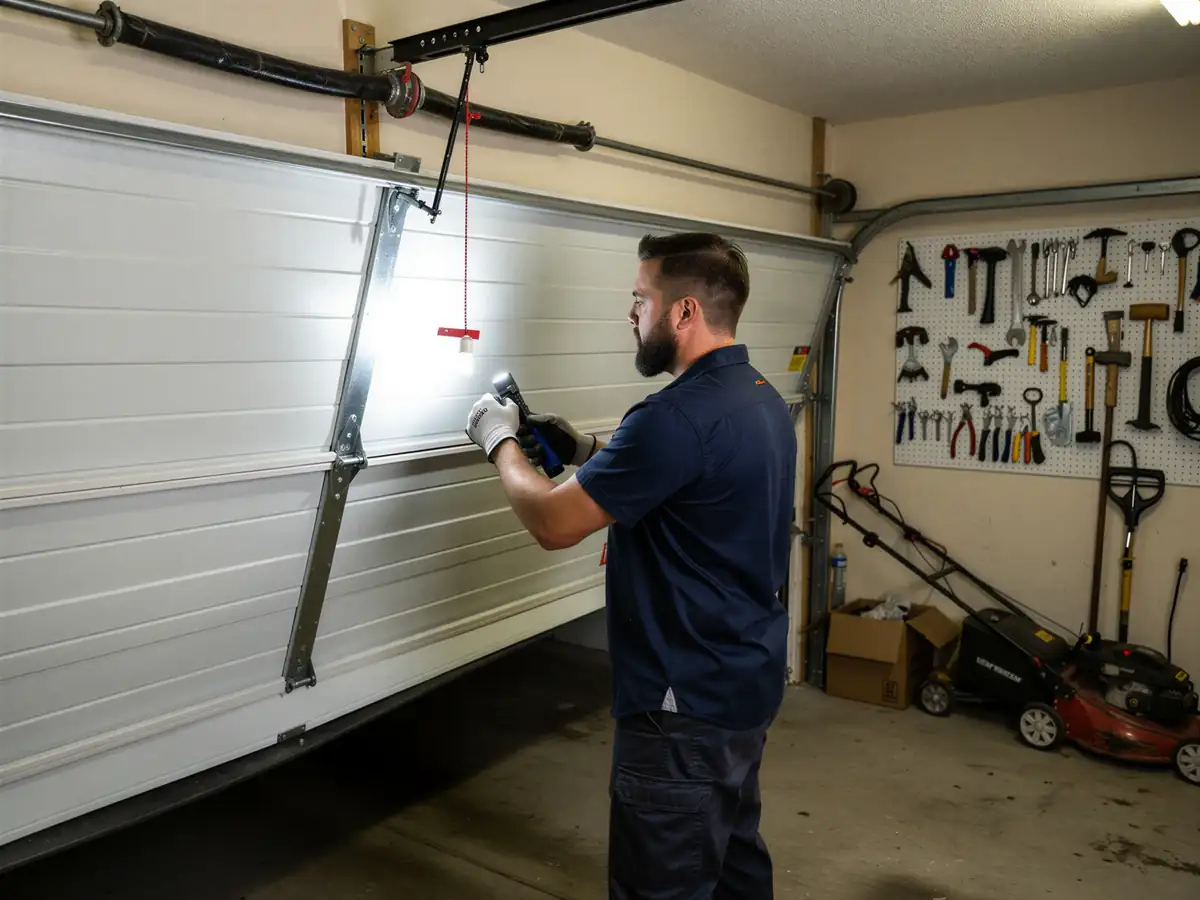
The classic sign is a grinding or rattling sound as the door travels, usually worse at the top or bottom of the run where the roller has to flex through the curved section of track. If one roller has gone oval instead of round, you'll often feel the door shudder or jerk at a specific point every single cycle, same spot each time. Steel rollers that have lost their bearing grease start making a dry metal-on-metal squeal, which is different from the duller clunk of a roller that's actually cracked or chipped. Some owners notice the door running crooked, catching on one side before the other - that's usually a roller near the bottom bracket that's worn enough to let the panel sag. If you see a roller stem bent at an angle instead of running straight into the track, stop running the door; a stem that lets go completely can drop a panel off the track.
Can You Do This Yourself
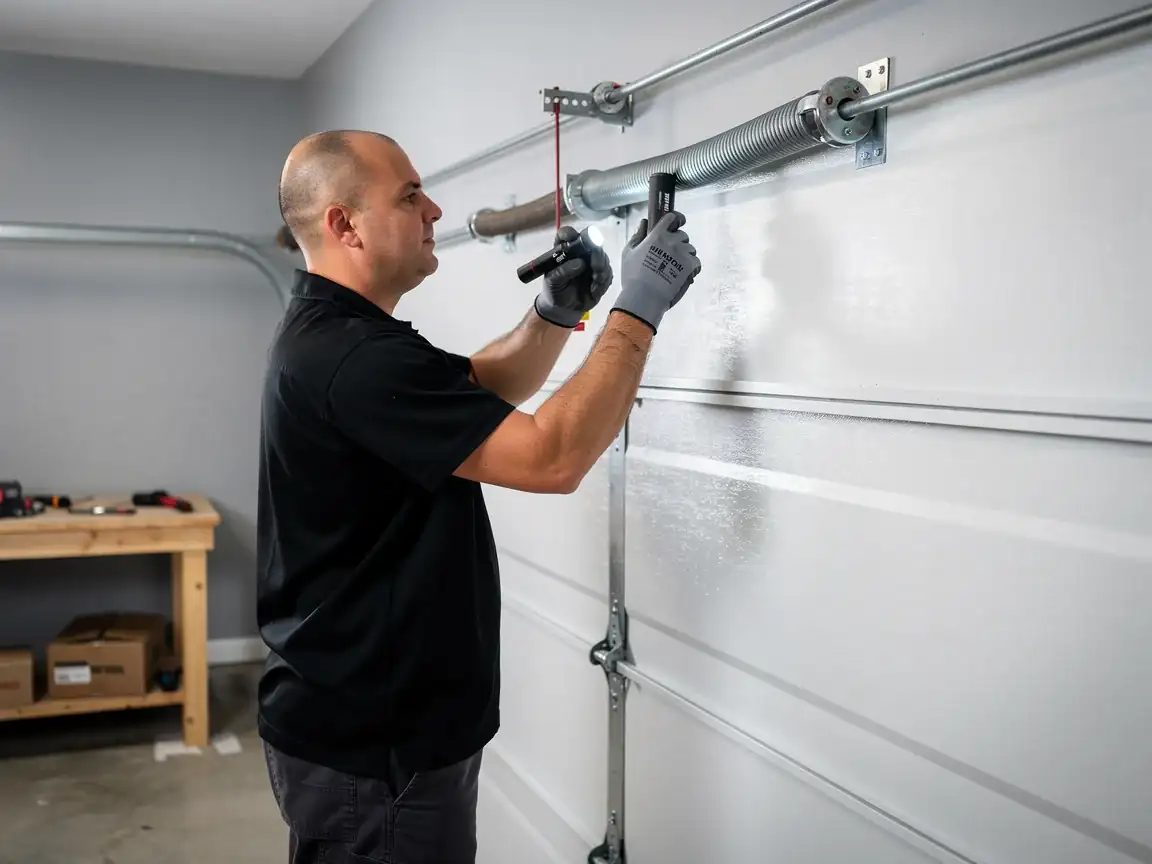
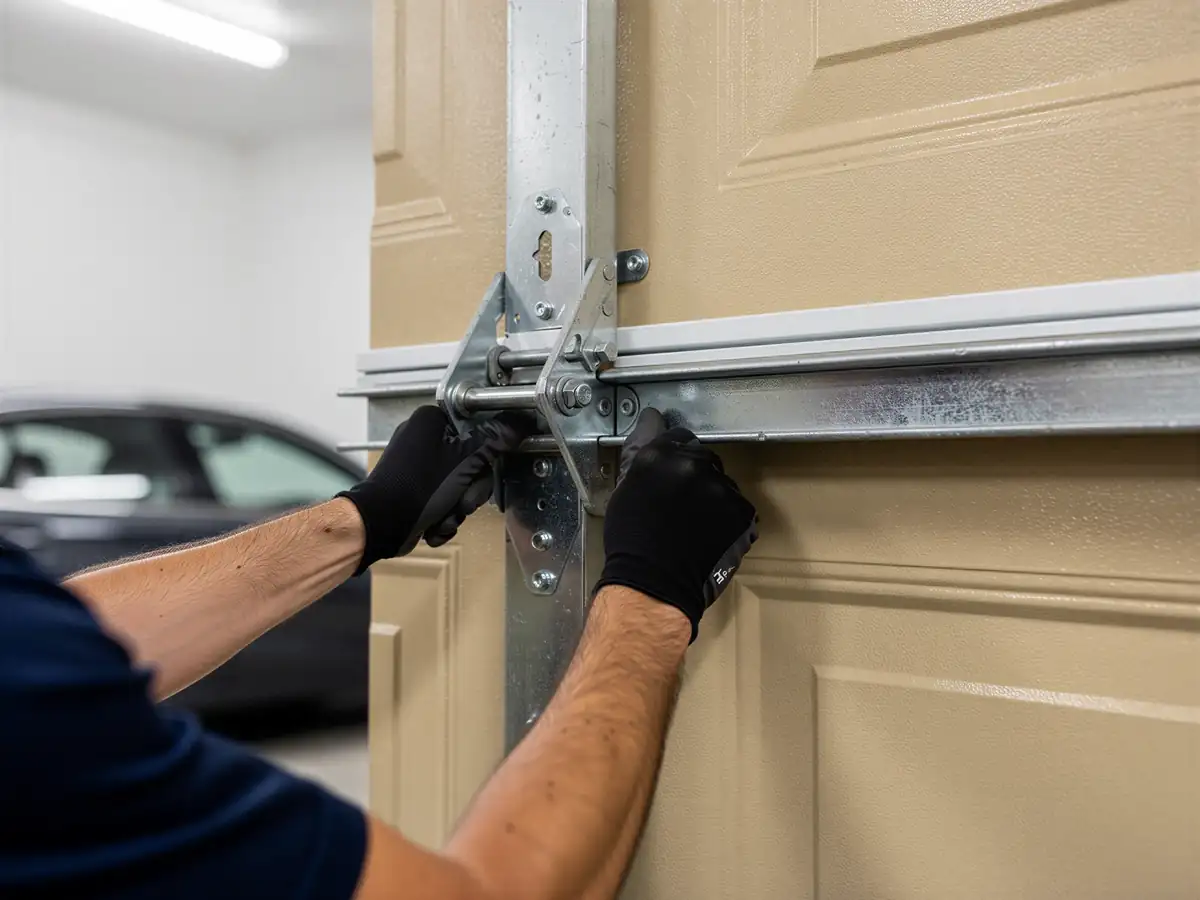
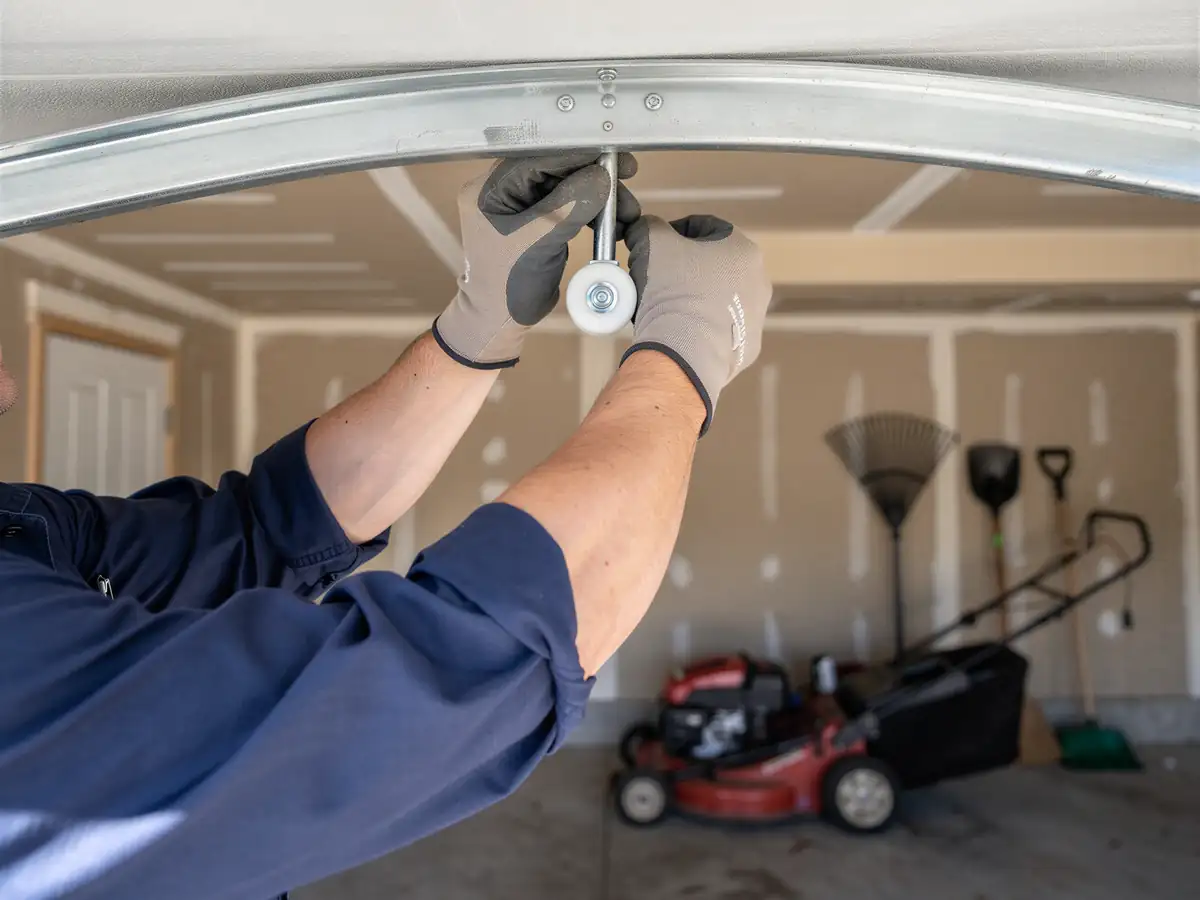
Swapping a roller on an unsprung section of track, with the door down and the opener disconnected, is within reach for a reasonable number of homeowners - it's mostly a matter of removing the roller bracket bolts and sliding the old one out. Where it stops being a DIY job is the two rollers nearest the bottom bracket on a door with a torsion spring overhead; those brackets carry spring tension even with the door closed, and backing out the wrong bolt can let a bracket snap toward you. We also don't recommend it if your rollers are the kind set into a continuous track with no removable section, which some of the older 1990s-era installs in this area used - that's a job that needs the track opened at a joint, not forced. If you're not sure which kind you have, that's worth a call before you start pulling bolts.