Serving Amarillo, TX & nearby
(806) 302-5966
Amarillo, TX

Garage Door Installation for Amarillo's 1980s-2010s Housing Stock

Most Amarillo garage doors date to the 1983-2013 building boom. See why that era's hardware fails here and what a proper replacement install involves.

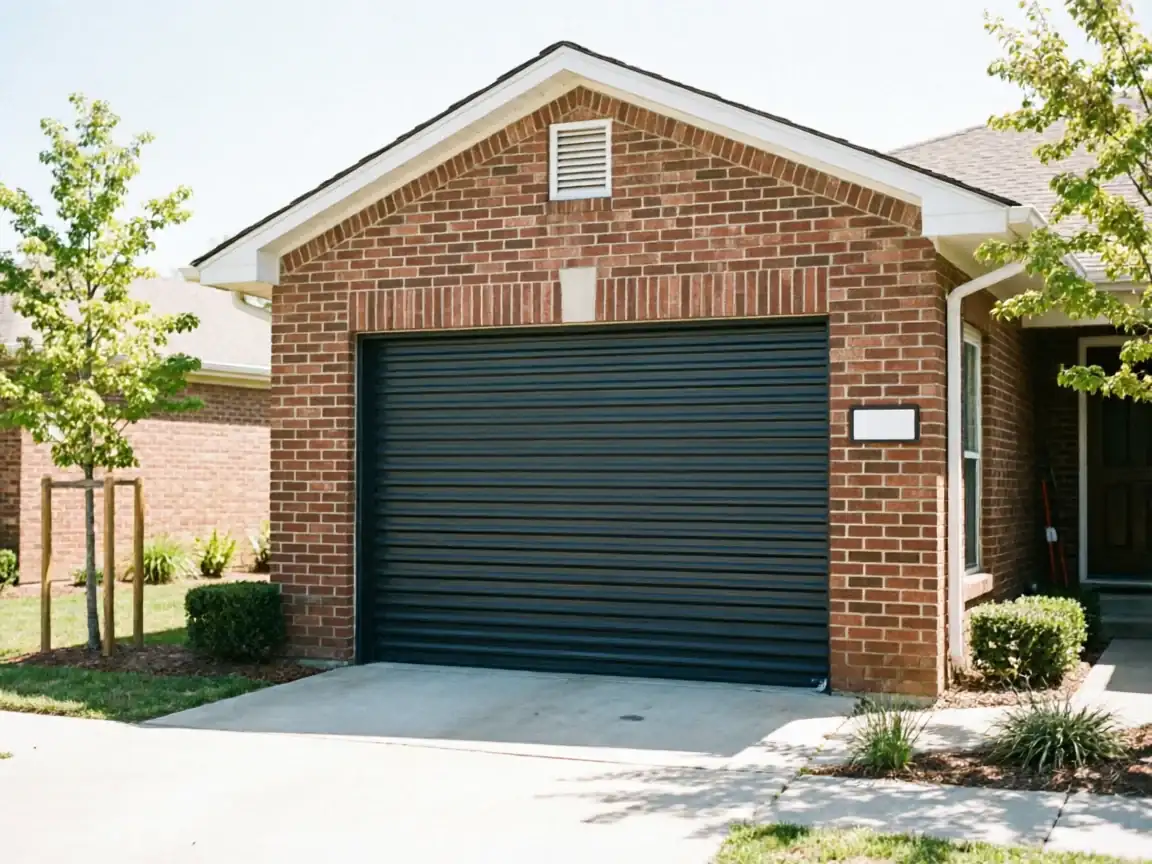
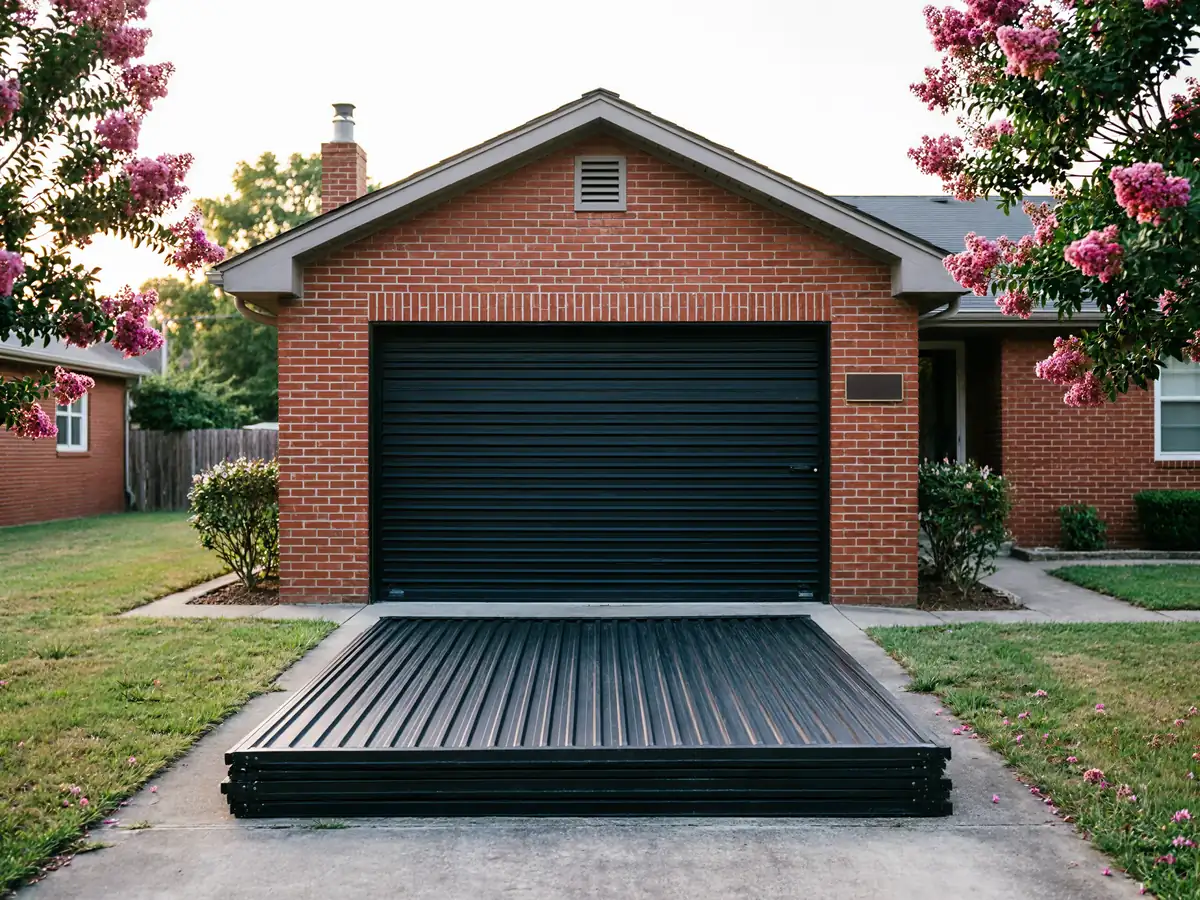
A black garage door is closed on a brick house with a new door on the driveway.
Amarillo, TX
8 services
2 service areas
Diagnosis first, then the fix

The Cost of This Job

We don't post a flat number here because installation cost depends on what's already on your house and what you want to replace it with. What we can tell you is what drives the estimate in this market. Most homes across the Amarillo service area went up between 1983 and 2013, with the median build year sitting around 1998. That means the opening sizes, header clearance, and track configuration are fairly standard for the era - which usually keeps labor predictable compared to retrofitting a pre-war house with an odd-sized opening. Two named areas in our service footprint share that same 1980s-90s stock, so we see the same builder-grade setups over and over: steel panels, non-insulated or thin-insulated cores, and springs sized for the opener loads common at the time. With a median household income of $107,286 in the area, a lot of homeowners here opt to upgrade insulation value and weatherstripping at the same time as the door itself, since the incremental cost is smaller than doing it as a second job later. We'll always walk you through what's original equipment versus what's worth upgrading before any number gets written down.

What Causes It Around Here

The climate here runs cold with moderate intensity, and that matters more for garage doors than people expect. Steel panels and torsion springs both contract in cold weather. On a door that's original to a house built in the late 1980s or 1990s - which describes a large share of homes in this service area - that contraction is happening on hardware that's already near the end of its rated cycle life. Springs don't fail because of one cold snap; they fail because twenty-five-plus winters of expansion and contraction have worked the metal fatigue that was always coming. Add in lubricant that thickens in cold temperatures and rollers that were never upgraded from the original steel wheels, and you get the stiff, noisy, uneven travel that eventually turns into a full failure. This is also why we see more call-outs for full installation versus simple repair in the older sections of town: when the door, opener, and spring system are all original to a house from the 1983-2013 build window, fixing one part often just exposes that the rest is close behind it.

What You Are Seeing

If your door is original to a house built anywhere in that 1983-2013 window, here's what usually shows up first. Daylight at the bottom corners even when the door looks closed - the seal was never rated for the temperature swings this climate band produces. A door that feels heavier to lift by hand than it used to, which usually means the spring has lost tension gradually rather than snapped outright. Panels that look fine but rattle or flex in wind, especially on the thinner single-layer steel that was standard builder-grade material in the 80s and 90s stock common to this area. Some owners also notice the opener straining or reversing on cold mornings - that's often the door, not the opener, working harder than it should because the original hardware wasn't built for a 30-plus-year service life. None of these are emergencies on their own, but together they're the signal that you're looking at a replacement decision, not another round of lubricant and adjustment.

Can You Do This Yourself

Some of the diagnostic work is fine to do yourself: watching how the door moves, checking for daylight gaps, listening for strain on the opener. Full installation is not a project we'd recommend as a DIY job, and we'll say that plainly. A torsion spring under load can cause serious injury if it's wound or released incorrectly, and getting the track alignment off by even a small amount on a new door creates wear that shortens its life from day one. We also won't pretend every job is worth doing as a repair - if your door is original to a home from the 1983-1998 range and the spring, opener, and panels are all original too, patching one part is usually a short-term fix on a system that's past its working life. Where we draw the line: if you're comfortable with basic home maintenance, keep an eye on the gaps and the lift weight, and call once you're seeing more than one of the warning signs. That's the point where a full install starts to make more sense than another repair visit.
How it works

From “it’s stuck” to “it’s fixed”

A quick, honest process - no guesswork and no surprises, start to finish.

  1. 1
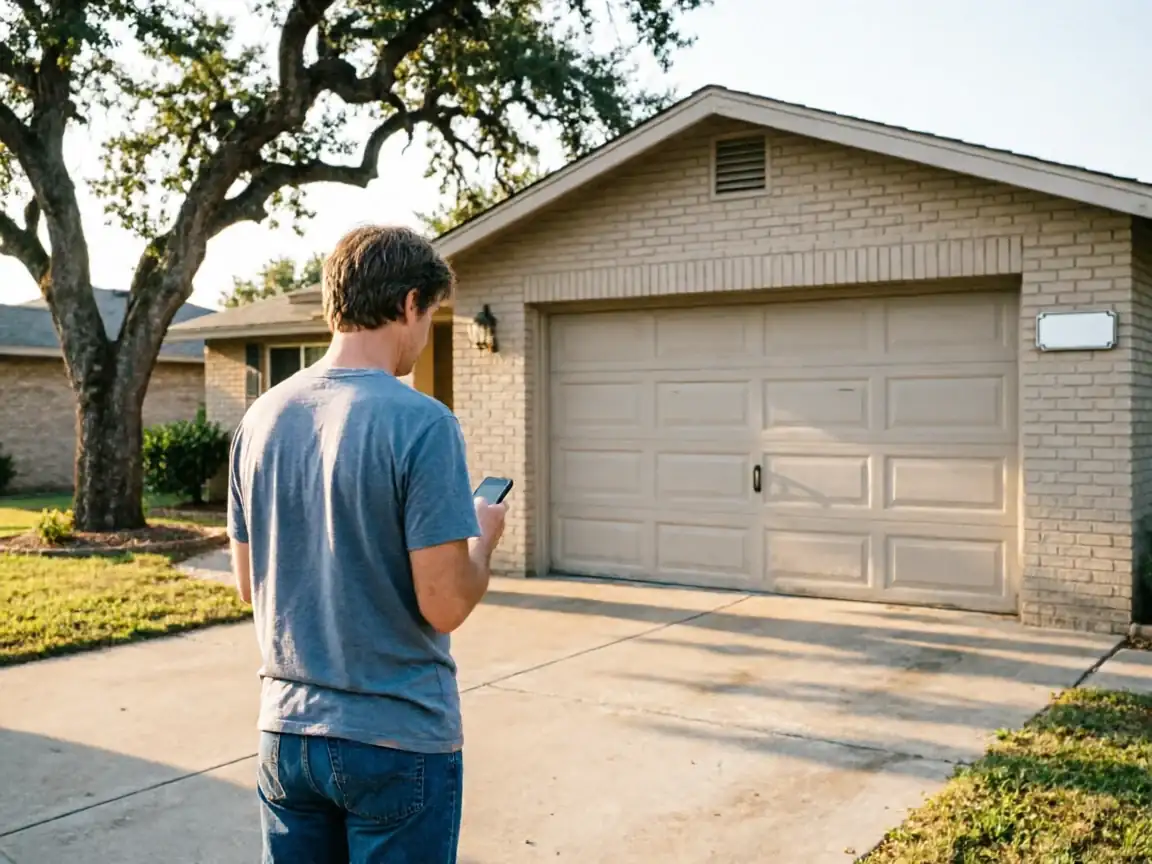
    A man stands in a driveway looking at his phone, facing a closed garage door.

    Tell us what’s wrong

    Describe the symptom - won’t open, loud bang, opener runs but the door won’t move.

  2. 2
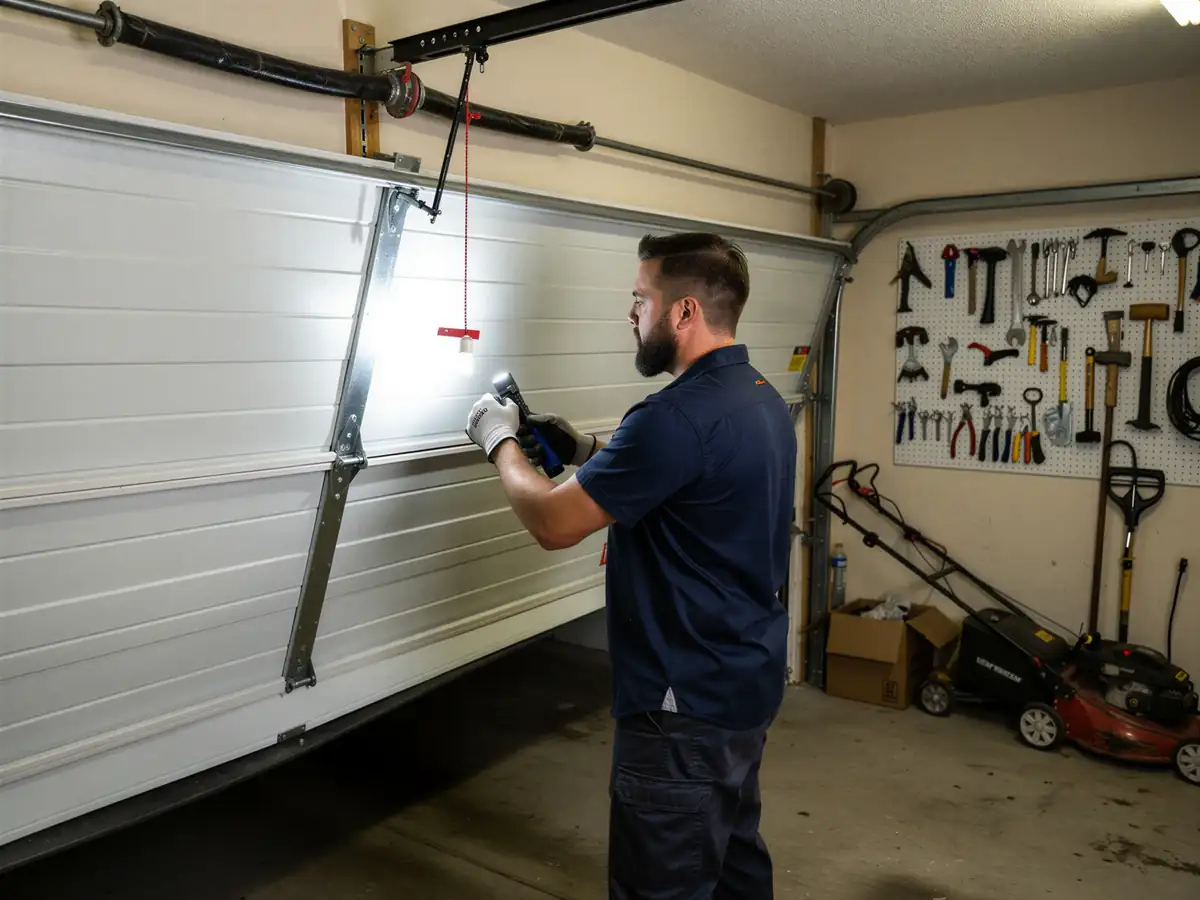
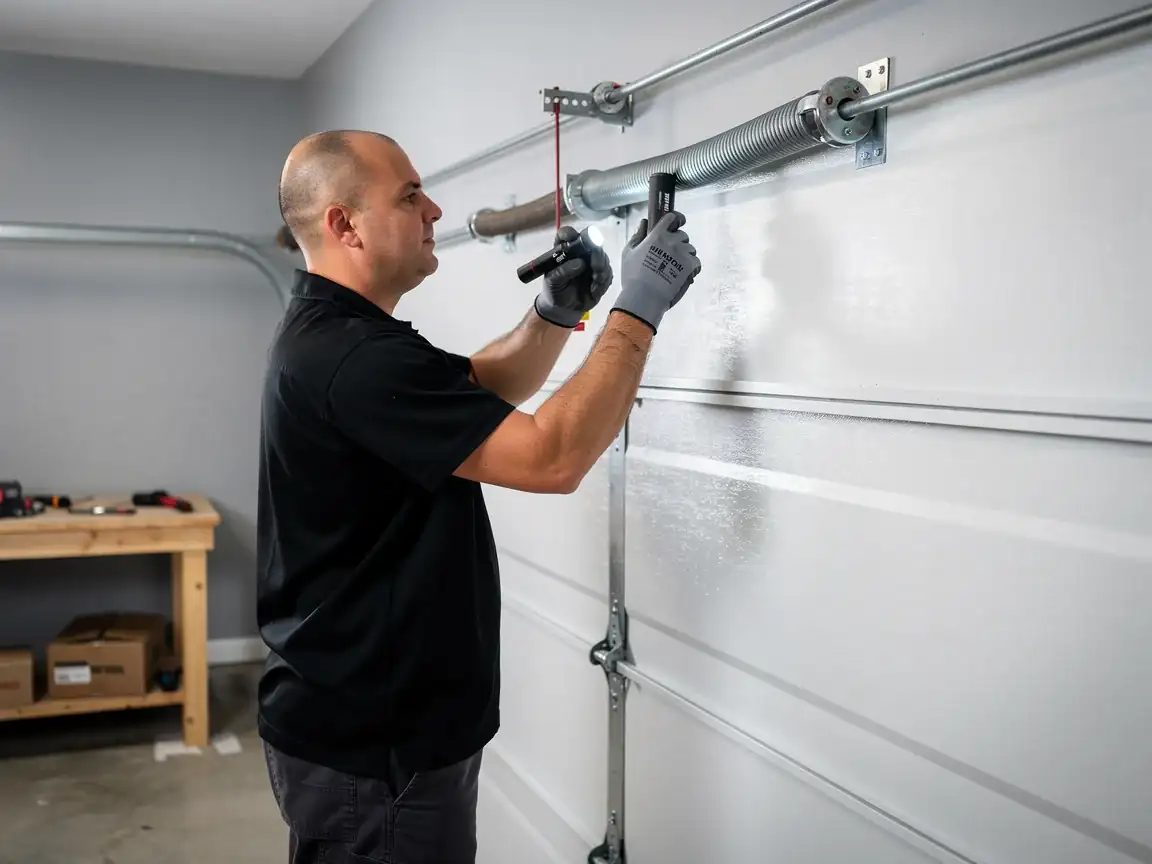
    A technician inspects a garage door torsion spring with a flashlight.

    On-site diagnosis

    A technician tests the door under power and by hand and finds what actually failed.

  3. 3
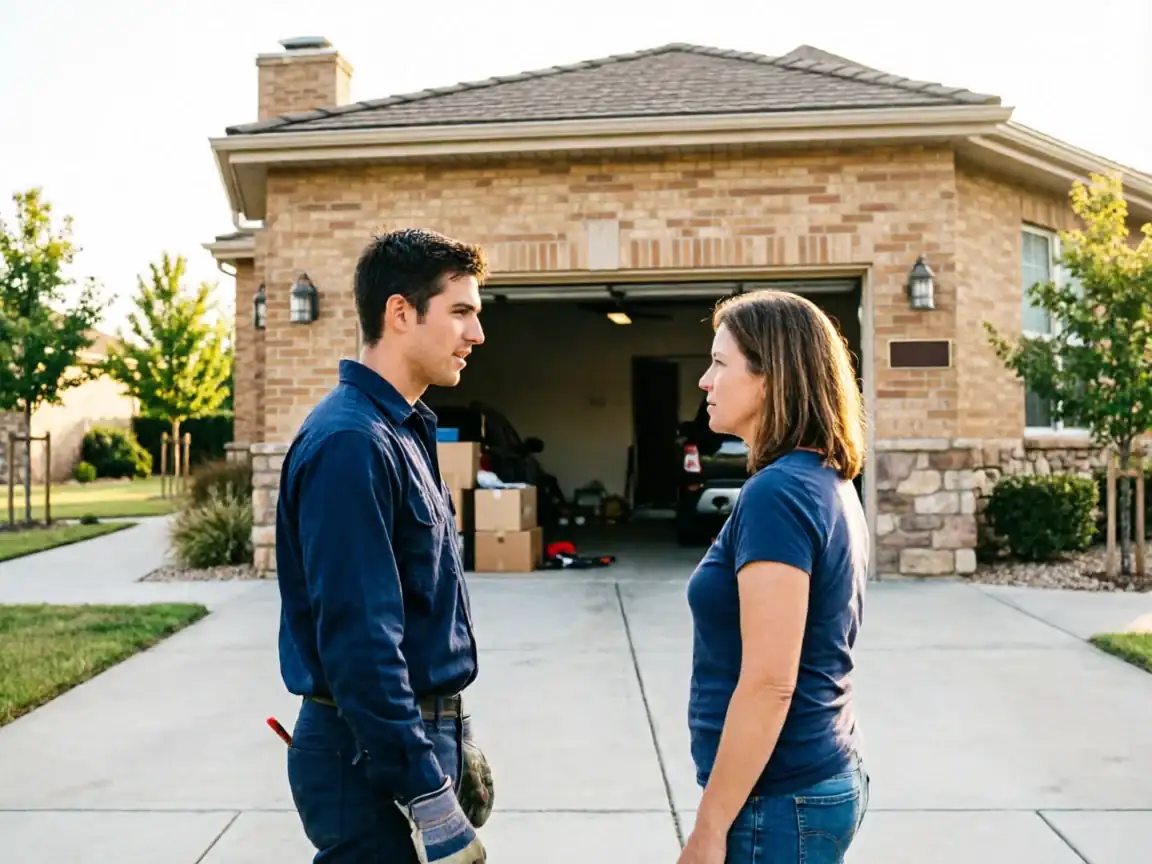
    A technician and a woman stand facing each other in a driveway in front of a house.

    Clear, up-front plan

    You get the fix that’s needed and what drives the cost - before any work starts.

  4. 4
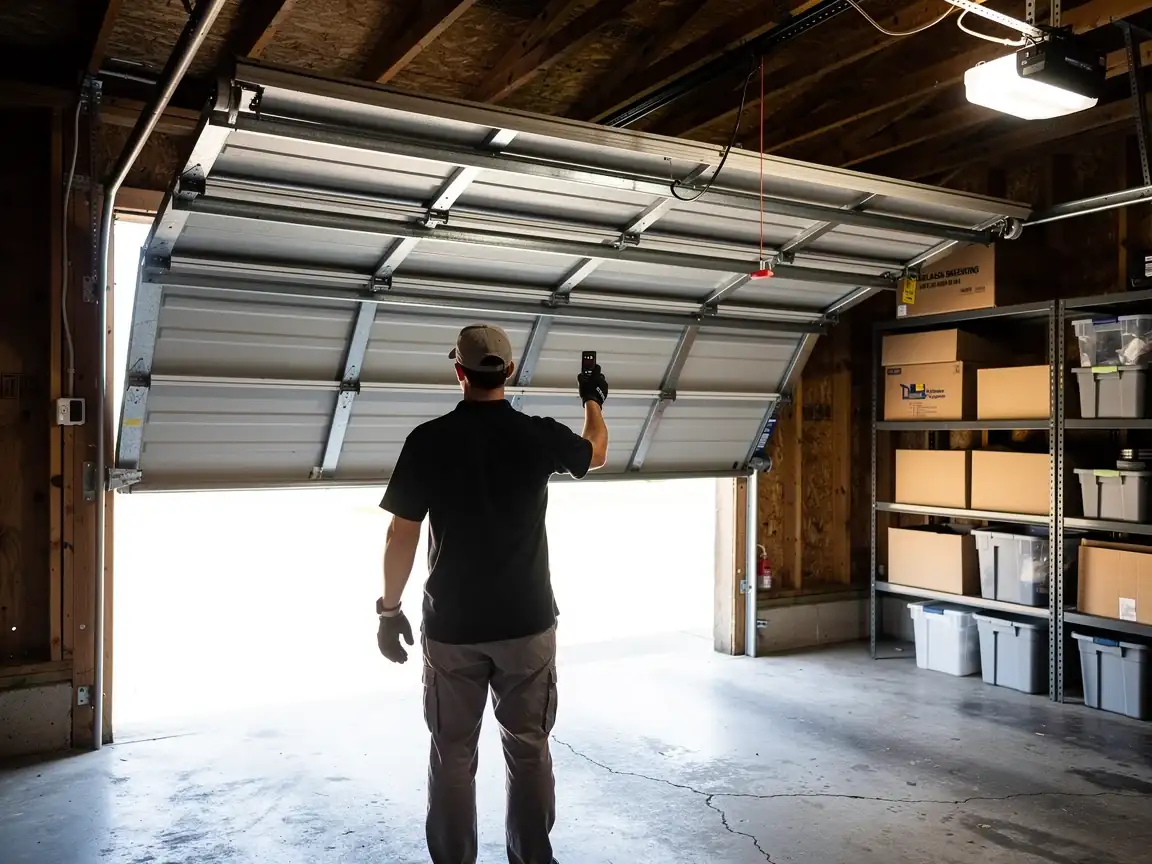
    A technician operates a partially open garage door with a remote control.

    Repaired & tested

    The repair is done, the door is set true and tested, and the work area left clean.

Not sure which repair your door needs in Amarillo, TX? Describe what it’s doing - every job starts with a diagnosis.

How we work

What to expect

Diagnosis firstEvery visit starts by finding what actually failed - not a pre-written parts list.
The right part for the doorSprings and openers matched to the door’s weight and age, so the fix holds up.
Straight answersWhen a repair makes more sense than a replacement - or the reverse - you hear it plainly.
Clean, careful workTension released safely, hardware set true, the door tested under power before we leave.
Residents in Amarillo
Garage door services
Neighborhoods & suburbs
Serving Amarillo, TX
198,645
8
2
TX
What we do

Garage Door Services

Repair and installation work for Amarillo homes and businesses.

Where we work

Serving Amarillo & nearby

Local garage door service across 2 Amarillo-area neighborhoods and communities - is your street on the list?

2

Amarillo-area neighborhoods & nearby communities we cover

Nearby communities

Questions

Frequently asked

Straight answers about garage door repair in Amarillo. Still unsure? Ask us directly.

How old does a garage door have to be before replacement makes more sense than repair?

It depends more on condition than a strict age cutoff, but most homes in this service area were built between 1983 and 2013, median 1998. A door and spring system original to a house from that window has usually hit the end of its practical service life, especially once more than one component is showing wear.

Does the cold weather here actually affect garage door hardware?

Yes. The service area sits in a cold, moderate-intensity climate band, and steel springs and panels contract in low temperatures. On older torsion springs, repeated seasonal contraction accelerates metal fatigue that eventually leads to failure, which is why winter call-outs for full replacement are common on original hardware.

Do you install garage doors outside Amarillo itself?

We cover the surrounding service area, including communities like Bushland, about 13 miles out, and Canyon, about 15 miles out. If you're near either of those, mention it when you call so we can confirm the visit.

Ready to get your garage door sorted?

Tell us what it’s doing and where you are in Amarillo - we’ll take it from there.

Request a QuoteCall